LETHERER TRUSS INC.
Menu
  • External link opens in new tab or window
  • External link opens in new tab or window
  • External link opens in new tab or window
  • External link opens in new tab or window
  • External link opens in new tab or window
  • External link opens in new tab or window

SAFETY


This section of our web site is provided as a courtesy, and may not reflect the most up-to-date U.S. and state of Michigan safety requirements.  Contractors and installers are responsible for following all applicable MIOSHA and OSHA safety compliance rules for on-site installation of our products.  The number one cause of death and serious injury at residential construction sites is falls by employees working above the ground on roofs, ladders and scaffolding, and MIOSHA has fall protection requirements to keep your workers safe.


MIOSHA LINKS:

External link opens in new tab or windowClick here for their web site


MIOSA Consultation Education and Training (CET) Division Phone 517.322.1809 or External link opens in new tab or windowclick here for MIOSHA training seminars.


INDUSTRY LINKS:


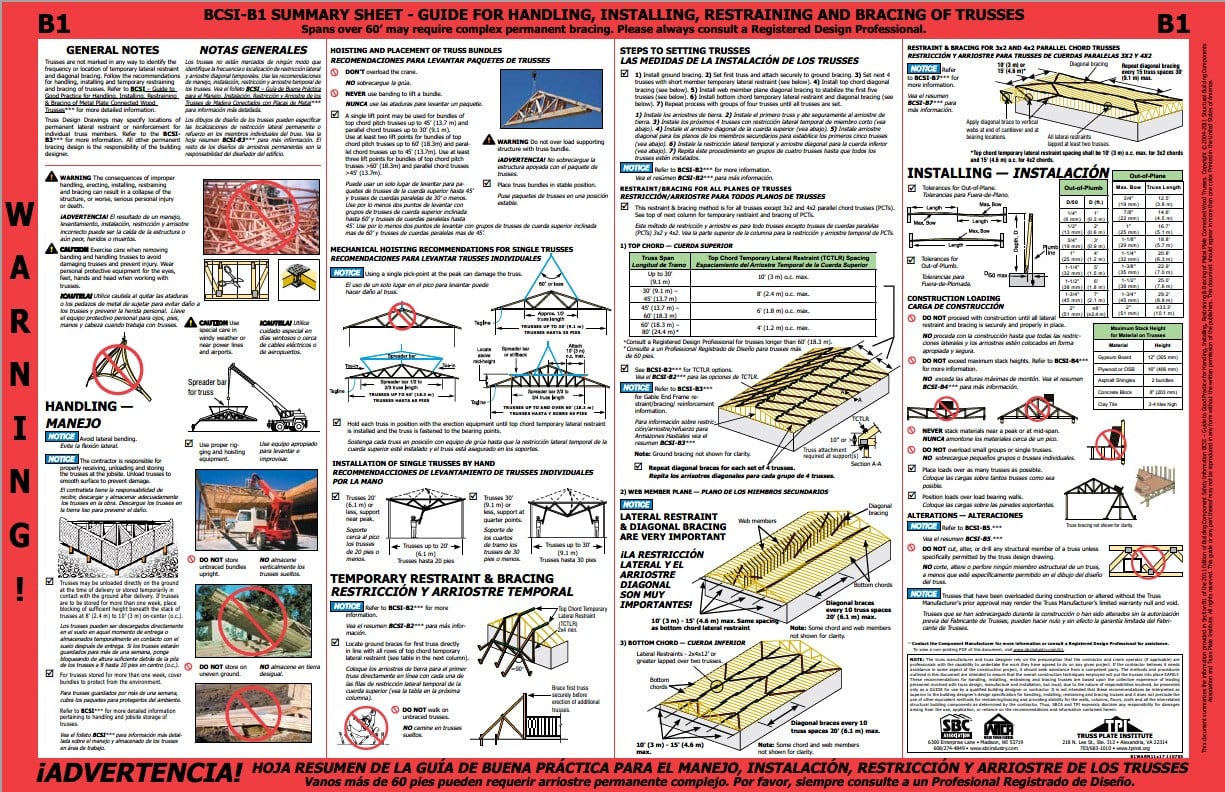
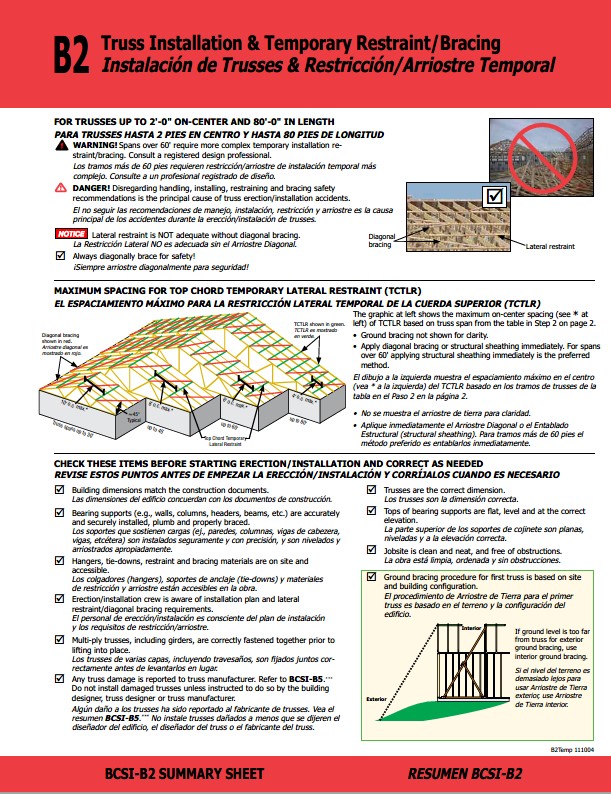
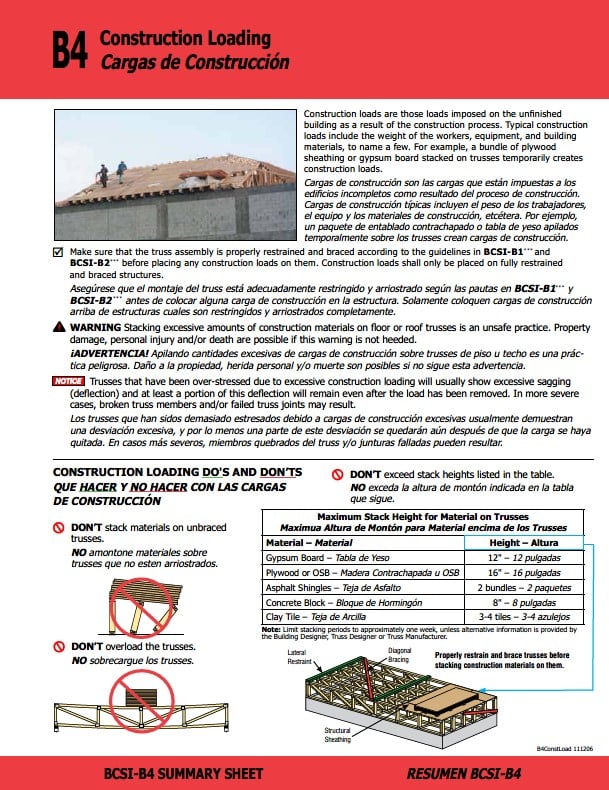
PDFs are courtesy of links to WTCA â€“ Representing the Structural Building Components Industry.

For more information, and to order pamphlets, visit: External link opens in new tab or windowhttps://www.sbcacomponents.com

Building Component and Safety Information Flyers:
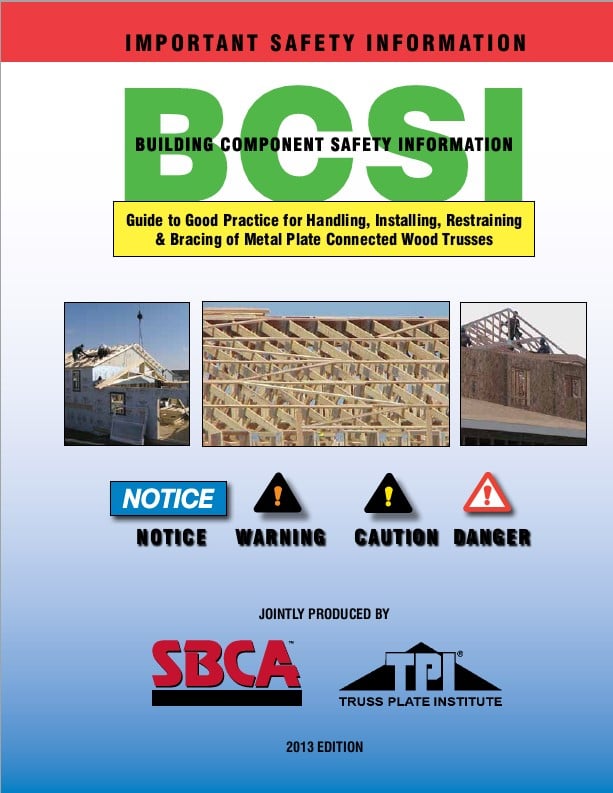


External link opens in new tab or windowBCSI


  External link opens in new tab or windowB1    External link opens in new tab or windowB2External link opens in new tab or window 


IMPORTANT INFORMATION ABOUT TRUSS LOADS:


Trusses are engineered to carry specific loads and are a critical part of the designing process. There are two main categories, Live Loads and Dead Loads.


Dead Loads are permanent loads applied to the structure. Some examples would be roof and ceiling materials, purlins, bracing, air conditioning and heating units, sprinkler systems and partition walls.


Live Loads are loads or short duration, such as those caused by construction, rain, wind, snow, maintenance and occupancy of the structure.

There are also concentrated loads, which are applied at one specific point on a truss, such as an air conditioner hung from a truss. It is important that your truss manufacturer is aware of any special loads such as this example so trusses can be designed to meet the proper load requirements.


Other Special Conditions:

Some other special conditions that are important to know for truss designing are high moisture or temperature conditions, use of trusses to transfer wind load, higher roofs that may cause additional snow loads on lower roofs and job site conditions that may cause rough handling of the trusses during installation.

The loading requirements should be specified by the customer, builder or building designer. Minimum load requirements are specified by local and state building codes.


MX GUARDD DOG - EMAIL SPAM CHECKER
Column


External link opens in new tab or window851 Industrial Ct , Clare, 48617


Column


External link opens in new tab or window989-386-4999


Column


External link opens in new tab or windowltinfo@letherer.com


Click to edit


Open hours :

8:00 am - 5:00 pm


Column

Building and Construction

Column
957355
Invalid Form properties detected


HAVE  A QUESTION?

PLEASE NOTE WE ARE ONLY WHOLESALE AND WILL NOT PROVIDE QUOTES DIRECTLY.
PLEASE CONTACT YOUR LOCAL LUMBER YARD FOR ANY PRICING.


Column
  • External link opens in new tab or window9893864999
  • External link opens in new tab or windowltinfo@letherer.com
  • External link opens in new tab or window851 Industrial Ct.
SiteLock
  • About Us
  • About Us
  • Our Work
  • Contact
close lightbox